GO
Sorry, but you already have a basket with that name. Please use something else.
Are you sure you wish to delete this basket?()
This action cannot be undone.
Sorry, something went wrong
Please report the problem here.
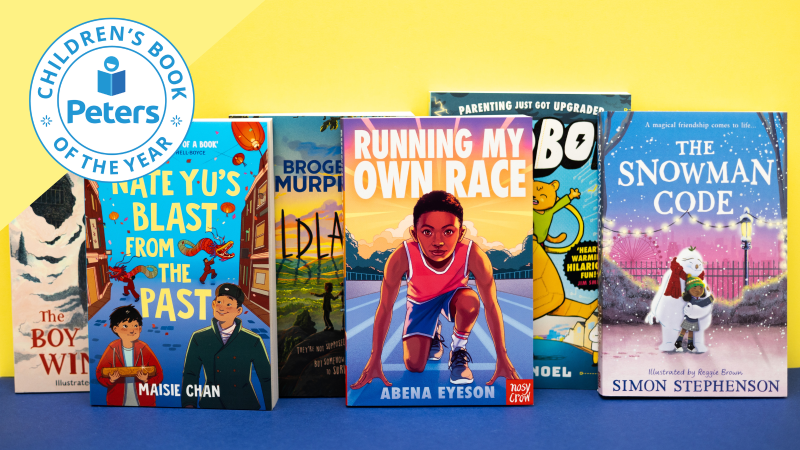
Celebrating junior fiction: with shortlisted Junior Fiction Book of the Year authors
February 5th 2026
Choice is a foundational part of encouraging children to read for pleasure, and in middle grade fiction, there is a welcome growth in new formats and new stories being told. The Peters Junior Fiction Book of the Year 2026 shortlist showcases this exciting variety and talent. In this list, there's a book for everyone!
Shortlisted authors Maisie Chan, Abena Eyeson, Brogen Murphy, Jack Noel and Lucy Strange join us on the blog to celebrate this middle grade heyday. They share their thoughts on what current publishing offers young readers, and why they love to write for this age group.
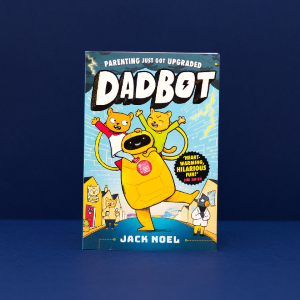
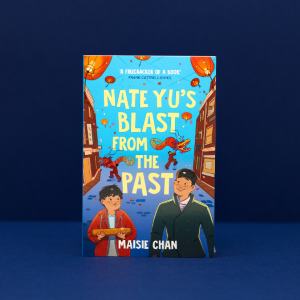
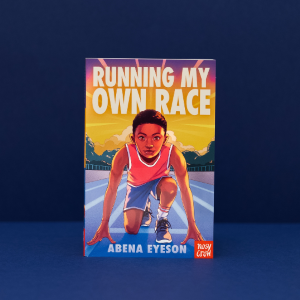
Click the book jackets below to read the creators' celebration of junior fiction books.
|
|
|
|
|
"It seems like there are no rules... and I like that!"
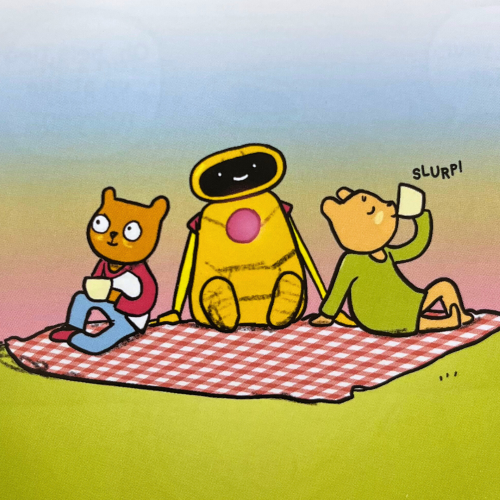
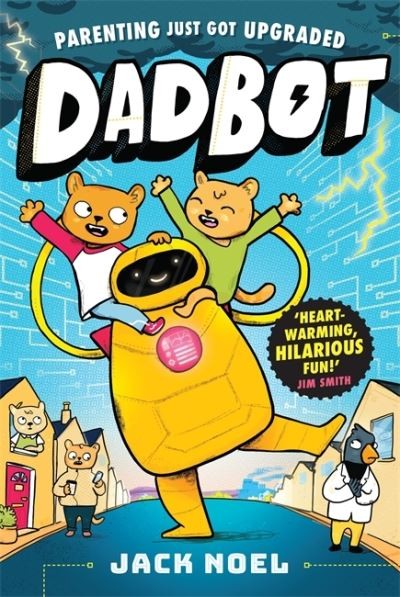
Jack Noel, creator of Dadbot
There is so much great stuff happening in junior fiction right now. There are comic books, puzzle books, books you can write in. Stories about gods and robots and dinner ladies and postmen. It seems like there are no rules… and I like that!
I am quite old, but I am not very mature. I like the things that kids like - comics, action, adventure, laughs. I also like other things that young people like - pesto pasta, waterslides, computer games, Dog Man books, the Dog Man movie, etc.
With Dadbot, I started out just wanting to put some funny characters together to make myself laugh. Imagine: two kids find a robot, and it comes to life! Lol! That was all I had.
The whole story took a while to come out and when it did it surprised me a bit: it is silly, but it also has themes about family and technology and what it means to be human. I didn't expect to see all that big stuff in there but those are things I think about and care about. I think that when you make a new thing you should always put a bit of yourself in the mix too (unless it's a cake or something).
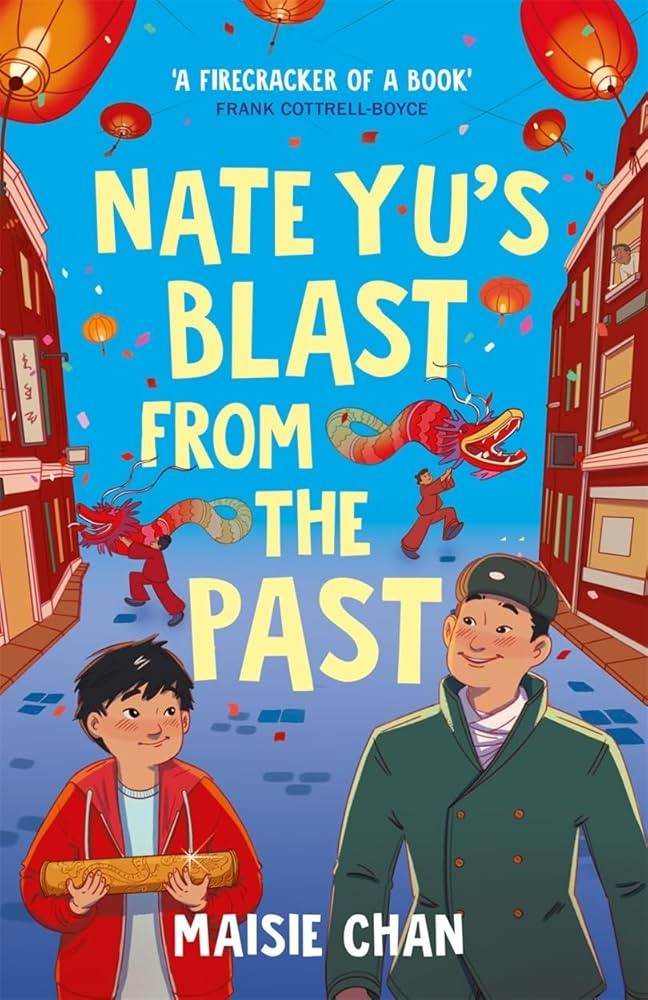
"CHOICE is the key word for this age group."Maisie Chan, author of Nate Yu's Blast from the PastCHOICE is the key word for this age group. Illustrated fiction is blooming with books such The Day My Dog Got Famous by Jen Carney, Louie Stowell’s Loki series or Rashmi Sirdeshpande and Mamta Singh’s Hari Kumar, Ultimate Superstar. All these books are inclusive, funny and engaging. Some of my favourite recent graphic novels have East Asian myths such as The Monkey King and the World of Myths by Maple Lam, and The City of Dragons by Jaimal Yogis and Vivian Truong. However, we still have classic voices such as Hannah Gold, JP Rose and Katya Balen. Writing junior fiction is a pleasure and privilege for me. I love talking to this readership when I go into schools. Readers in this age group are curious and want to expand their knowledge, they want to know what’s out there because they are still forming their opinions of themselves and the world. They want to try new things and can laugh at themselves. There can be a lot of kindness and empathy if it’s nurtured, and this is reflected in the fiction authors write for this age group. There is often a lot of hope and resilience too. Nate Yu’s Blast from the Past had two threads that I was compelled to tell. The first was the untold history of the Chinese Labour Corp in the First World War; lots of children don’t know about them. The second thread was my own personal experience of not feeling ‘Chinese’ enough being an adopted child of two white parents. I wanted children who maybe don’t look like their parents/carers to connect with Nate’s character. I also really wanted to try something new and so I added the ghost! But it’s not a scary ghost story, it’s a warm-hearted caper with a little mystery. |
"I love the idea of playing a small part in helping children make sense of the world."
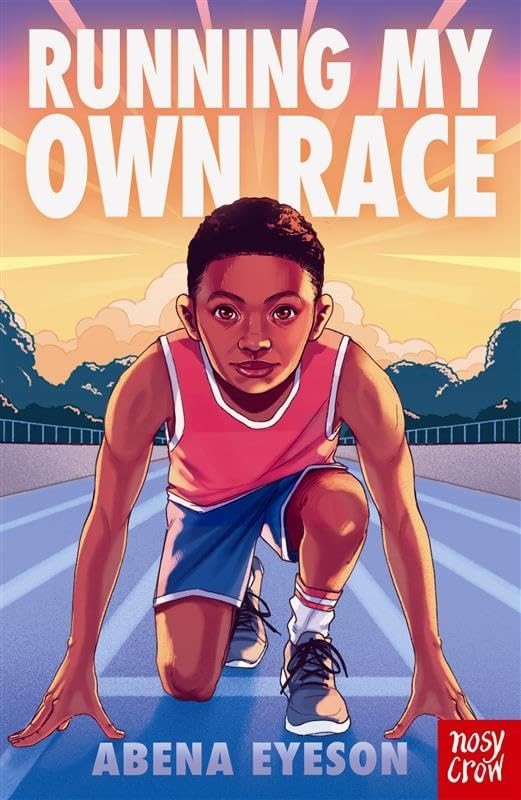
Abena Eyeson, author of Running My Own Race
Current junior fiction offers more options and choice for children, making it more likely that they will find something they want to read and that they relate to. There’s still room for improvement in terms of enabling more marginalized voices and stories to be published. But the fact that Running My Own Race has been published and is being well received suggests there’s an appetite for change.
I write fiction for children because I believe in the power of books. I love the idea of playing a small part in helping children make sense of the world they are living in, what they are experiencing and witnessing. I aim to write engaging, positive and aspirational stories that inspire children and encourage empathy as well as being thought-provoking.
Running My Own Race centres the black child in a story with themes that many can identify with. I hope it encourages children to be self-accepting and to have courage. I hope it encourages them to be inspired to speak up and believe in their dreams, whatever the difficulties or challenges that have to be overcome to achieve them. I also wanted to show a way of resolving conflict that encourages dialogue, understanding and a positive way forward.
"We're living in a golden age of children's literature."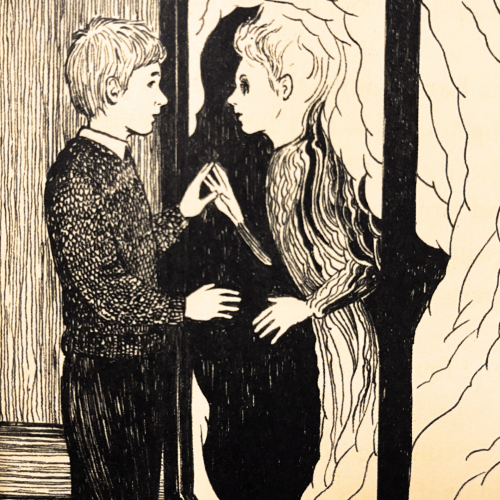
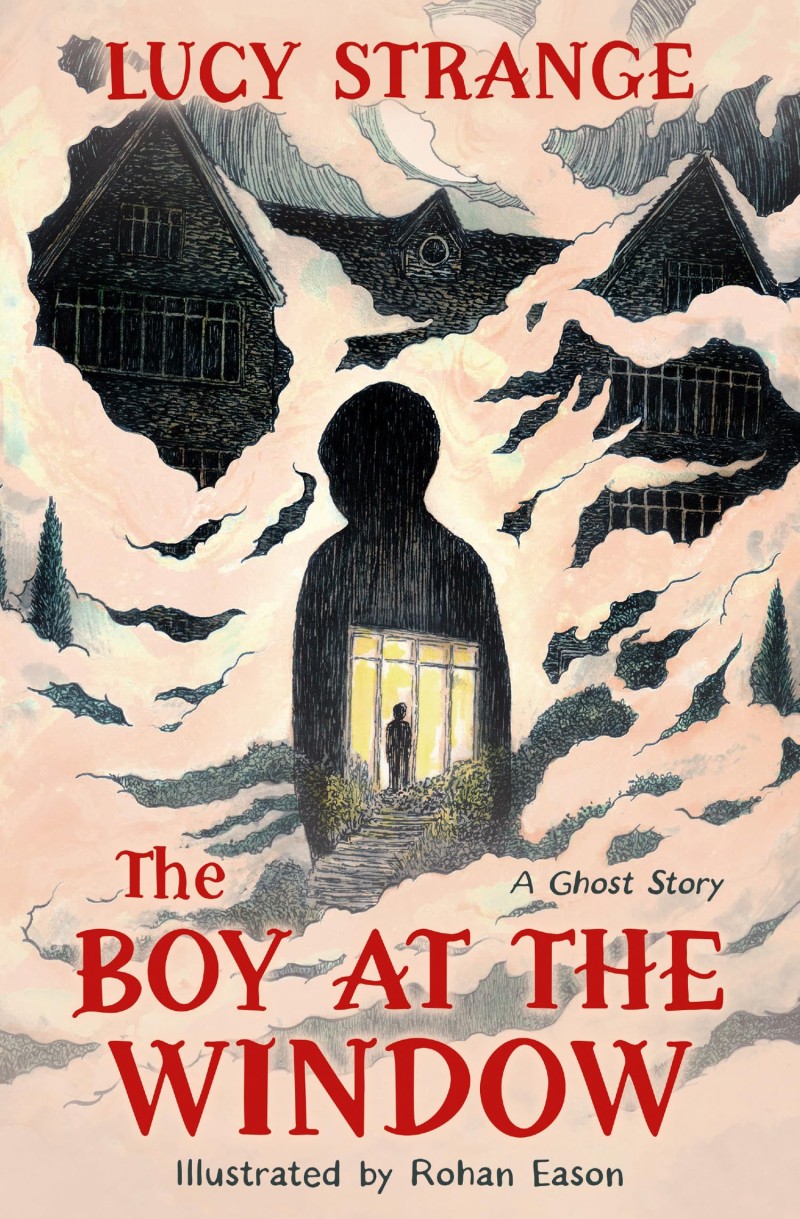
Lucy Strange, author of The Boy at the WindowI truly believe we're living in a golden age of children's literature - there has never been so much choice, so much glorious diversity in the wealth of books available for this age group. It's a brilliant age to write for as children between 9 and 12 are fiercely curious and ready for all sorts of excitement and challenges in the stories they choose to read. I believe firmly in not patronising young readers - I think stories for this age group can touch upon very real, very dark, very big ideas if we present them in a responsible way. I wanted to write a proper old-fashioned ghost story that would be engaging and accessible for today's young readers, and quick to read too! It's been so wonderful to see The Boy at the Window being read aloud (as all good ghost stories should be!) - being shared by friends and in classrooms. For me, a good ghost story is all about enjoying the thrill of that creeping suspense, and the spine-chilling twist at the end! |
"Books build children's understanding of the world and their capacity for empathy."
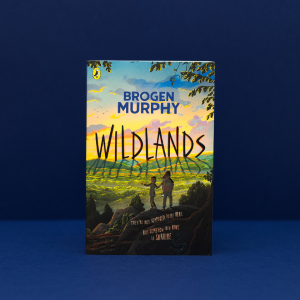
Brogen Murphy, author of Wildlands
What does current junior fiction publishing offer children now? Diversity. That’s the biggest, most exciting change from the books I read as a child to what’s being published now. There’s a much wider range of characters from different backgrounds and life experiences — neurodivergent and disabled protagonists, voices from the global majority, queer families, displaced people, and so much more.
Books build children’s understanding of the world and their capacity for empathy. And so it’s vital that the stories they read reflect a wide and beautiful range of characters, families and communities — so all young people can see both themselves, as well as lives very different from their own, on the page.
The best thing about writing for and about children is the freedom in what’s ‘allowed’ to happen in these stories. Young fiction isn’t so strictly separated into genres like mystery, action, fantasy or sci-fi, so you have the scope to move between one type of story and another — or even blend them within one book. Young people are looking for exciting, thought-provoking, life-changing stories. So, as long as you can give them that, you have a lot of freedom (and fun!) in how you do so.
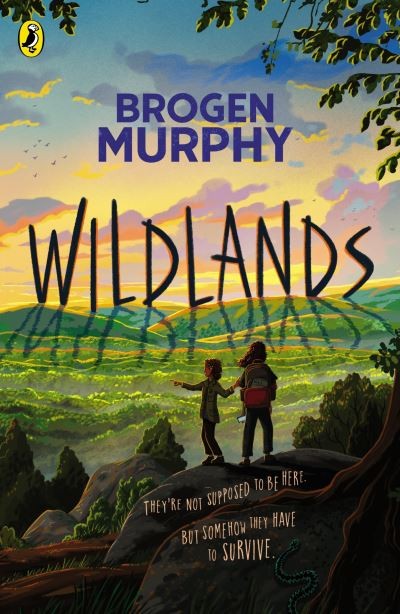
I think the world needs to change, and — more importantly — I believe that it can change. But that starts with being able to imagine a better future than the one we’re often told is inevitable. Wildlands paints an ambitious but achievable picture of what this country could look like in the near future: a place where people have made space for the native wild animals that once shaped our landscapes, and where humans live in greater harmony with the natural world. It’s the future I want to see — and one I hope young readers can start to believe in too.
Crown your winner of Peters Junior Fiction Book of the Year 2026!Teachers and librarians, take part in Peters Children's Book of the Year 2026 and vote for your favourite junior fiction book.
|

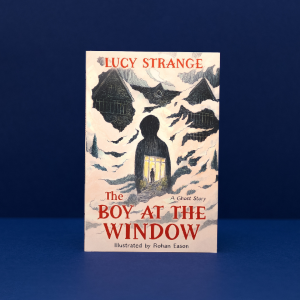
Dadbot, Illustration © Jack Noel | The Boy at the Window, Illustration © 2024 Rohan Eason | The Snowman Code, Illustration © 2024 Reggie Brown
Read latest news & blogs about Peters Children's Book of the Year...
- hello@peters.co.uk
- 0121 666 6646
- Send a message
- Meet the team
- Peters Ltd
- 120 Bromsgrove Street
- Birmingham
- B5 6RJ